A runny nose and cough are usually manageable at home, but breathing difficulty, poor feeding, dehydration, and worsening symptoms change the decision. By the end, you will know when outpatient paediatric care is suitable, which warning signs require urgent help, and what to check before choosing a clinic.
Key takeaways
- Seek emergency help for severe breathing trouble, blue lips, extreme sleepiness, or dehydration.
- Arrange a paediatric assessment when cough affects breathing, drinking, sleep, or normal activity.
- Choose a clinic that checks oxygen level, breathing effort, hydration, ears, throat, and chest.
- Offer fluids, saline nose drops, and age-appropriate fever medicine while arranging care.
When is a cold-and-cough clinic appropriate, and when is it an emergency?
A cold-and-cough clinic suits a child who is alert, drinking reasonably, breathing comfortably, and available for examination without delay. The sound of the cough matters less than breathing effort, skin colour, alertness, and hydration.
Seek emergency help immediately for any of these signs:
- Chest indrawing or retractions
- Blue or grey lips or face
- Pauses in breathing
- Severe wheezing or stridor
- Inability to speak or cry normally because of breathlessness
- Unusual drowsiness, inability to wake, or confusion
- Inability to drink, signs of shock, or rapidly worsening illness
Do not let a clinic visit delay emergency services. If you are considering a child cold and cough clinic Baner, confirm that it can provide oxygen, monitoring, and rapid hospital transfer; proximity alone does not make it appropriate.
Use this same-day rule: arrange paediatric review today for any infant with worsening cough, breathing changes, reduced feeding, fewer wet nappies, or fever. Seek urgent advice for an infant younger than three months with a temperature of 38°C or higher.
Also choose same-day assessment for a child with heart or lung disease, immune suppression, or repeated wheeze when respiratory symptoms are new or worsening. Go straight to emergency care if any warning sign appears.
Which symptoms mean my child needs a paediatric assessment?
A routine cold needs paediatric assessment when breathing worsens, fever accompanies deterioration, drinking falls, urine output drops, or the child becomes unusually tired. A viral upper-respiratory infection can leave a cough for several weeks, but a cough lasting more than four weeks is chronic and needs assessment, not repeated over-the-counter medicine.
| Signs | What they may indicate | What to do |
|---|---|---|
| Cold symptoms followed by cough, wheeze or crackles, rapid breathing, and feeding difficulty in an infant | Bronchiolitis | Arrange prompt examination; feeding and breathing determine urgency |
| Fast breathing while calm, fever, or lower-chest indrawing | Possible pneumonia | Seek same-day paediatric assessment |
| Night or exercise cough, repeated wheezing, or previous emergency visits | Asthma or recurrent viral wheeze | Ask for an action plan instead of repeated antibiotics |
Count breaths only when the child is calm and consider fever, because crying and temperature can raise the rate. Suspected pneumonia requires age-specific breathing assessment and examination for lower-chest indrawing; do not rely on a phone assessment or search result.
Seek review promptly if the child has worsening cough, new wheeze, poor feeding, fewer wet nappies or urinations, persistent fever with deterioration, or rapid breathing. If you are searching for a child cough clinic baner, choose paediatric assessment when these signs appear rather than treating the search result as a diagnosis.
What should a good child respiratory consultation include?
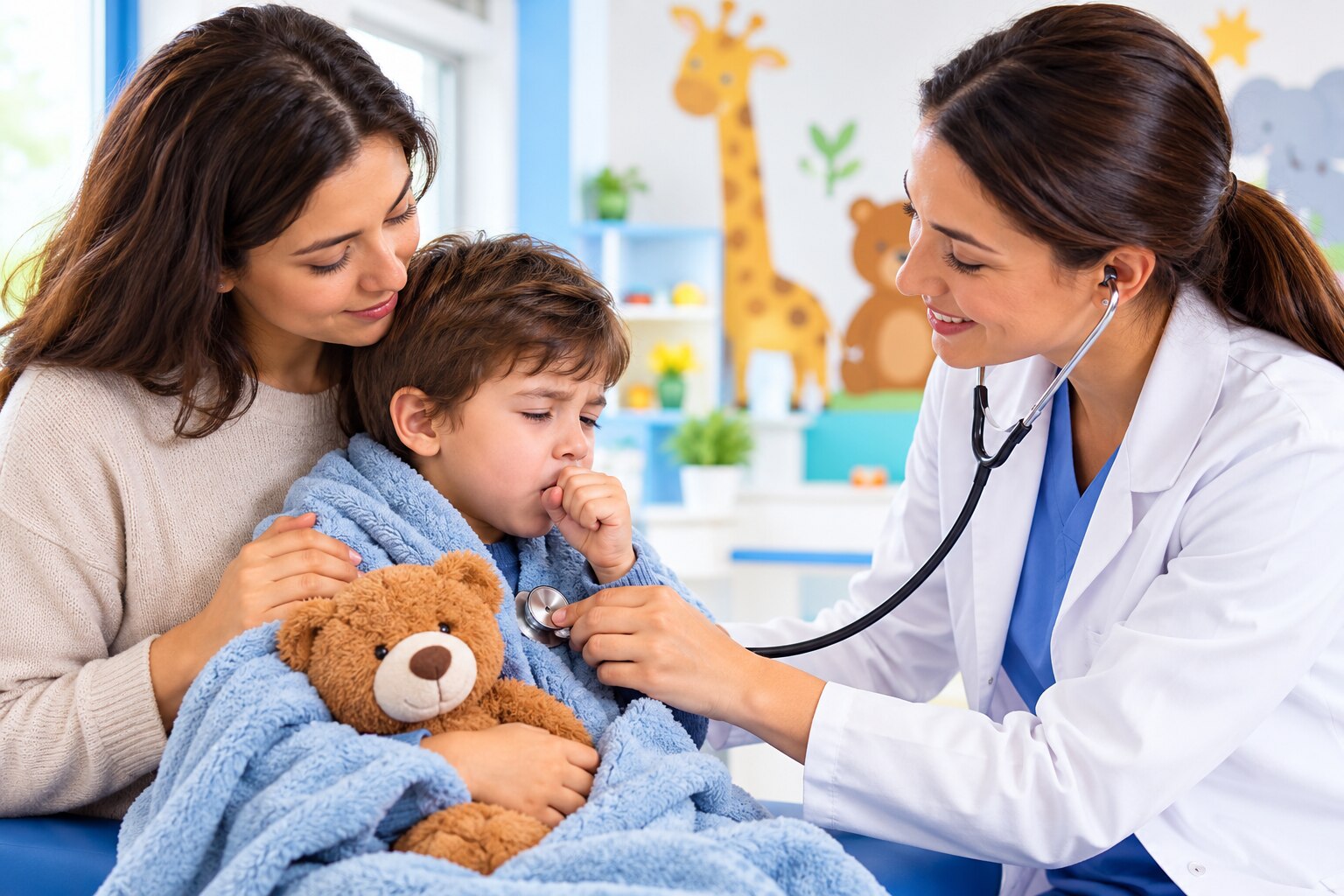
A good appointment starts with the child, not a test. The clinician watches breathing effort, counts respiratory rate while the child is calm, checks temperature, hydration, feeding, alertness, and general appearance, and measures oxygen saturation when indicated.
A normal oxygen reading does not rule out serious illness; a low or unreliable reading needs clinical interpretation, not automatic home treatment.
| Test | Usually appropriate when | Why it helps |
|---|---|---|
| Chest X-ray | Examination suggests pneumonia, hypoxaemia, a foreign body, or another diagnosis | Looks for lung changes or obstruction |
| Blood tests | Infection is severe, atypical, or another diagnosis is suspected | Supports targeted decisions |
| No routine testing | Uncomplicated cold with comfortable breathing and good intake | Avoids incidental findings and unnecessary treatment |
Antibiotics do not treat viral colds. Use them when examination or testing supports a bacterial infection, since unnecessary doses cause adverse effects and promote resistance.
For uncomplicated bronchiolitis, treatment is usually supportive: clear nasal secretions gently, maintain fluids and feeding, monitor breathing, and provide oxygen or observation when clinically indicated. Routine antibiotics, salbutamol, nebulised adrenaline, and corticosteroids are not useful unless another diagnosis or a specific clinical indication exists.
When choosing a child respiratory illness doctor in pune, ask whether the assessment includes these checks and whether the clinician can escalate care. A reliable consultation explains both what the child has and why a proposed test or treatment is needed.
How should I compare clinics in Baner and Balewadi?
Search ranking and distance do not prove that a clinic can assess a sick child safely. Compare services using this checklist:
| Question to ask | Why it matters | What to confirm |
|---|---|---|
| Is the clinician trained in paediatrics? | Children’s breathing, hydration and medication needs vary by age. | Paediatric qualification and experience with infants and children |
| Can you measure vital signs? | A cold can hide low oxygen or rapid breathing. | Oxygen saturation, respiratory rate, temperature, pulse and hydration assessment |
| Can you provide oxygen and monitoring? | Breathing can worsen while you wait or during examination. | Oxygen supply, pulse oximetry and observation facilities |
| What happens if my child deteriorates? | Delayed escalation can be dangerous. | Hospital admission arrangements and transfer pathway, including intensive care access |
Choose based on your child’s age, breathing effort, drinking and urine output, illness duration, and medical history—not proximity alone. Use extra caution with infants and children who have heart or lung disease, immune suppression or repeated wheeze.
- Searching “child cold treatment Balewadi” or “child infection clinic near Baner” can find nearby options, but neither phrase guarantees quality.
- Ask whether the clinic can examine your child promptly rather than relying on a phone opinion.
- Dr Pooja Gire Pediatrician Baner, Balewadi, Pune offers paediatric outpatient assessment alongside access to paediatric intensive and critical care through its hospital setting; confirm current capability, availability and transfer arrangements before attending.
What can I safely do at home while arranging care?
Offer frequent fluids and continue breast or bottle feeds; smaller, more frequent feeds help if congestion makes drinking tiring. Encourage rest. Saline nose drops followed by gentle clearing can ease blocked breathing before feeds and sleep.
| Measure | Reasonable use | Important limit |
|---|---|---|
| Fluids and continued feeding | Prevent dehydration and maintain energy | Stop forcing feeds if breathing or fatigue makes drinking difficult |
| Saline nose drops | Loosen mucus before feeds or sleep | Clear gently; do not insert cotton buds or objects into the nose |
| Honey | Ease cough in children older than 12 months | Never give honey under 12 months because of infant botulism risk; it does not treat pneumonia, asthma, or another serious cause |
| Over-the-counter cough and cold medicine | Usually little proven benefit | Young children can suffer serious side effects; follow the product label, age restrictions, and paediatrician advice |
Watch breathing effort, skin and lip colour, alertness, drinking, and wet nappies or urination. Arrange prompt reassessment for worsening breathing, reduced intake, fewer wet nappies or urinations, persistent fever with deterioration, or new wheeze. Do not wait for a clinic if the child becomes blue or grey, unusually drowsy, unable to drink, or rapidly worse.
A cough lasting beyond four weeks needs assessment rather than repeated cough medicine.
Take these details to the appointment:
- Age and symptom start date
- Temperature readings
- Medicines and doses already given
- Medical conditions and allergies
- Vaccination history
Frequently asked questions
When is a cold-and-cough clinic appropriate, and when is it an emergency?
A clinic suits a child who is alert, drinking reasonably, breathing comfortably, and available for examination without delay. Seek emergency care for severe breathing difficulty, blue or grey lips, pauses in breathing, inability to drink, or unusual unresponsiveness.
Which symptoms mean my child needs a paediatric assessment?
Arrange an assessment when breathing becomes faster or harder, cough disrupts sleep or feeding, fever persists, wheezing develops, hydration falls, or symptoms worsen instead of improving.
What should a good child respiratory consultation include?
The clinician should assess breathing effort, oxygen saturation, respiratory rate, hydration, temperature, ears, throat, nose, and chest, then explain treatment, warning signs, and follow-up.
How should I compare child cold and cough clinics in Baner and Balewadi?
Compare paediatric expertise, examination facilities, appointment access, emergency referral arrangements, follow-up communication, and whether the clinic treats infants as well as older children.
What can I safely do at home while arranging care?
Give frequent fluids, use saline nose drops for congestion, keep the child away from smoke, and use fever medicine only at the correct age- and weight-based dose. Never give honey to a child under one year.
Keywords