
The first weeks with a newborn often bring questions that parents never expected to ask. Is the baby feeding enough? Is frequent waking normal? What does the baby's stool colour mean? When should weight be checked? Parents considering a Newborn Care Clinic in Baner can benefit from knowing which aspects of early infant health are commonly monitored.
Newborn care focuses on helping the baby transition safely through the earliest stage of life while giving parents practical guidance for feeding, hygiene, sleep, vaccination, and warning signs.
Feeding and Weight Are Closely Monitored
Feeding is one of the most frequent concerns during early pediatric visits.
The pediatrician may discuss how often the baby feeds, whether breastfeeding or formula feeding is being used, feeding duration, urine output, and whether the baby appears satisfied after feeds.
Weight monitoring provides additional information.
Some weight change shortly after birth is expected, but the baby's subsequent growth pattern helps clinicians assess how feeding is progressing.
Rather than comparing one baby with another, pediatric monitoring considers the individual infant's clinical condition and growth trajectory.
Understanding Newborn Sleep
Newborn sleep tends to be fragmented.
Babies commonly wake frequently because they need regular feeding and have not yet developed adult-like day-and-night sleep patterns.
Parents can discuss safe sleeping practices during pediatric visits, including the baby's sleeping position and sleep environment.
It is also useful to mention unusual difficulty waking the baby for feeds, marked lethargy, or significant changes from the baby's usual behaviour.
Jaundice Requires Appropriate Assessment
Yellow discolouration of the skin and eyes can occur in newborns. While newborn jaundice is common, its timing and severity matter.
A pediatrician can determine whether clinical observation is sufficient or whether bilirubin testing or additional assessment is appropriate.
Parents should avoid relying solely on visual comparisons or advice from other families because every newborn's situation is different.
Keep Track of Urine and Stool
Wet diapers and bowel movements provide useful information about feeding and hydration.
During the early days, parents may be asked about the number of wet diapers, stool frequency, stool colour, and changes in feeding.
Markedly reduced urine output, repeated vomiting, poor feeding, or unusual stool findings deserve medical attention.
Vaccinations and Follow-Up
Newborn healthcare also involves reviewing vaccines given at birth and planning upcoming immunisations according to the recommended schedule.
Parents should maintain a vaccination record and bring it to pediatric appointments.
Families in Baner and the wider Pune region of Maharashtra may also find it useful to keep discharge records from the maternity hospital available for early newborn consultations.
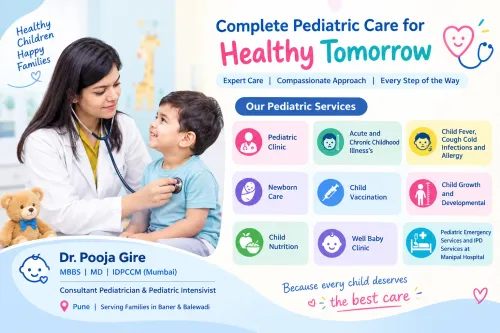
Dr. Pooja Gire Pediatrician provides pediatric support for parents navigating the newborn and infant stages. Early appointments can be used to discuss feeding, growth, vaccination, sleep, and day-to-day concerns that naturally arise after bringing a baby home.
Parents do not need to wait for illness before scheduling newborn care. Routine monitoring during this period can provide useful reassurance when development is progressing normally and help identify situations where closer medical assessment is appropriate.
Keywords