
A child who eats very little, relies on milk, gags on textures or is not gaining weight needs more than a generic meal chart. You will learn how a clinician evaluates growth, feeding skills, medical history and family routines, and how to prepare for a useful, safe nutrition appointment.
Key takeaways
- Track growth trends, not a single weight measurement.
- Assess feeding skills, symptoms and growth together.
- Bring growth records, food logs and medical reports.
- Allergies and medical conditions require an individual feeding plan.
When Does a Child Need Personalized Nutrition Assessment?
A child needs clinical nutrition support when the concern involves growth, feeding skill, symptoms or medical complexity—not simply a preference for larger portions. A naturally small child may remain healthy while following the same growth trajectory; concern rises when weight, length or height drops across centile lines or weight gain slows.
Use this checklist when deciding whether to book an assessment:
- Bring the child for review after inadequate weight gain, repeated vomiting or diarrhoea, chronic disease, or developmental concerns.
- Ask for weight, length or height, and head circumference to be measured and plotted over time. A single percentile does not diagnose poor growth. For children under 5, ask for WHO Child Growth Standards; WHO has separate references for ages 5–19.
- Seek feeding assessment for persistent gagging, choking, meals lasting unusually long, food refusal or a very restricted food range. Nutrition support must address texture and self-feeding, not only calories.
- Tell the clinician if the child was premature, tube-fed or medically complex. Corrected age, energy and protein targets, micronutrients, and coordination with neonatology, gastroenterology or speech-language therapy may be needed.
- Check food safety: never give honey before 12 months, and serve nuts and other hard, round or sticky foods in developmentally safe forms.
A child nutrition clinic in Baner is not the right first stop for severe breathing difficulty, blue or grey colour, unresponsiveness, seizure, severe dehydration or inability to keep fluids down. Seek emergency care immediately.
What an Infant Feeding Assessment Should Cover
An infant feeding assessment should link what your baby consumes with growth, development, feeding safety and family circumstances. It should cover direct breastfeeding, expressed breast milk and formula separately, because poor latch, low milk transfer, incorrect preparation, unsafe water, prematurity or a medical condition can change the plan.
The consultation should examine:
- Weight, length and head circumference against the child’s growth trajectory, including any downward crossing or inadequate gain.
- Breastfeeding frequency, latch, swallowing, breast softness after feeds, expressed volumes and signs of effective milk transfer.
- Formula type, scoop-to-water ratio, bottle preparation, feeding volume, teat flow and leftover milk disposal.
- Vomiting, diarrhoea, constipation, wet nappies, illness, supplements and medicines.
- Feeding duration, fatigue, coughing, choking, noisy breathing or distress during feeds.
- Oral-motor skills, alertness, posture and developmental readiness for spoon and finger foods.
- Caregiver routines, pressure to finish feeds, and whether feeding happens while distracted by screens.
For healthy infants, complementary foods generally begin at about 6 months while breastfeeding continues. The plan should introduce iron-rich foods and steadily increase variety, frequency and texture; delaying lumpy or textured foods without a reason can make later progression harder.
Families seeking an infant nutrition doctor in Baner should bring growth records and a typical day’s feeding details, not only a short list of foods. Persistent choking, repeated vomiting or poor growth needs medical assessment rather than extra calories alone.
How Toddler Feeding Support Addresses More Than Calories
A toddler nutrition consultation improves eating habits by matching portions and routines to the child’s growth and feeding skills, rather than prescribing extra calories alone. It can reveal whether refusal reflects pressure at meals, limited texture experience, discomfort, or a swallowing problem.
Practical support may include:
- Set predictable meal and snack times without grazing all day.
- Offer one familiar food beside a small portion of a new food.
- Let the child decide whether to eat and how much, while you decide what and when to serve.
- Progress from mashed foods to soft lumps, chopped textures and safe family foods instead of delaying textured foods.
By around 12 months, most children can eat family foods modified for safety and practise self-feeding with fingers or a spoon.
A toddler nutrition clinic in Baner should review growth using measured weight and height plotted over time, not a single percentile, because a naturally small child differs from one who is crossing down growth curves.
Ask for feeding or swallowing assessment if meals regularly last more than 30 minutes, the child gags or chokes, vomits during eating, refuses most textures, or eats only a very narrow range. Force-feeding can increase distress and avoidance; responsive feeding builds trust while still protecting nutritional adequacy.
When Allergies or Medical Conditions Change the Feeding Plan
Routine diet advice is not enough when a child’s growth, symptoms, development or medical treatment changes nutritional needs. Arrange clinical assessment if weight gain slows, the child crosses down growth trajectories, feeding causes distress, or vomiting, diarrhoea, chronic disease or developmental concerns persist.
A single percentile does not distinguish faltering growth from naturally small stature; assessment uses measured weight, length or height and head circumference plotted over time against WHO standards.
Escalate feeding support when any of these apply:
- A premature child needs corrected-age assessment, individual energy and protein targets, or micronutrient monitoring.
- A tube-fed or medically complex child needs coordination with gastroenterology, neonatology, speech-language therapy or an intensive-care team.
- Breastfeeding involves poor latch or low milk transfer, or formula preparation, water safety or medical conditions could affect intake.
- A suspected food reaction needs review of the timing, symptoms and amount eaten before testing. Supervised testing may be indicated; broad allergy panels can create false positives.
- Removing milk, wheat, egg or other staple foods could reduce calories, protein or micronutrients without a planned replacement.
A pediatric nutrition clinic Baner families consult should provide an individualized plan rather than simply adding calories. It should also address safety: never give honey before 12 months, and serve whole nuts and other hard, round or sticky foods in forms suited to the child’s developmental skills.
Choking risk depends on shape and texture, not whether the food is nutritious.
How to Prepare for a Child Diet Consultation in Baner
Bring seven days of food and drink records to a child diet consultation Baner, including portions, meal duration, grazing between meals, juice, milk, supplements, screen use and who feeds the child. Add videos of difficult chewing or swallowing, if safe to record, plus reports, medication lists and your concerns about vomiting, diarrhoea or stools.
- Breastfeeding: note latch difficulty, feeds in 24 hours and wet nappies.
- Formula or expressed milk: bring the tin or preparation instructions, and record water quantity, scoops and feeds.
- Toddlers and older children: record pressure-to-eat, preferred textures, refused foods and choking episodes.
- Bring previous weight, height or length measurements and dates. A useful clinic plots these over time, using WHO Child Growth Standards under age five and WHO references for ages 5–19, rather than judging one percentile.
| Outpatient service | Look for | Best match |
|---|---|---|
| Routine paediatric clinic | Growth plotting, diet review and follow-up | Selective eating or steady growth |
| Feeding-focused service | Assessment of texture, chewing, swallowing and feeding behaviour | Mealtimes with gagging, prolonged duration or distress |
| Medical nutrition service | Coordination for allergy, prematurity, chronic disease or poor weight gain | Crossing down growth lines, vomiting or inadequate gain |
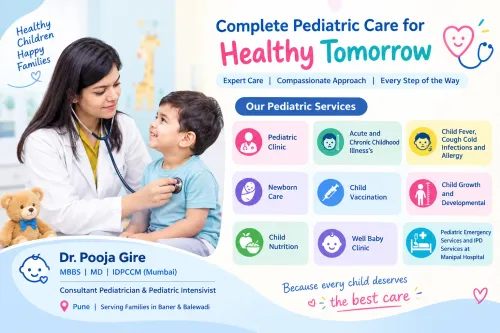
Dr Pooja Gire Pediatrician Baner, Balewadi, Pune is worth considering when you need growth assessment alongside medical review, rather than calorie advice alone. Ask whether the plan covers safe formula preparation, breastfeeding transfer and age-appropriate choking prevention; never give honey before 12 months or whole nuts to a young child.
Severe breathing difficulty, blue or grey colour, unresponsiveness, seizure, severe dehydration or inability to keep fluids down requires emergency assessment, not an outpatient appointment.
Frequently asked questions
When does a child need a personalised nutrition assessment?
Seek assessment when weight, length or height drops across centile lines, weight gain slows, feeding skills lag, symptoms affect eating, or medical complexity changes nutritional needs.
What does an infant feeding assessment cover?
It reviews feeding frequency, breastmilk or formula intake, bottle or breastfeeding technique, swallowing, reflux symptoms, readiness for solids, textures and growth.
How does toddler feeding support address more than calories?
It considers chewing, swallowing, food variety, mealtime behaviour, sensory responses, portions, routines and the child’s growth pattern.
When do allergies or medical conditions change a feeding plan?
A feeding plan needs medical review when food causes hives, vomiting, wheezing, diarrhoea or blood in stools, or when conditions affect absorption, swallowing or growth.
How should parents prepare for a child diet consultation in Baner?
Bring growth records, a three-day food and drink log, medication details, allergy history, medical reports and a list of feeding concerns.
Keywords